Image




Rapid and durable efficacy
CIMZIA delivered sustained joint improvement over 4 years
ACR20/50/70 response rates in CIMZIA 200 mg Q2W patients (n=138)1-3*†
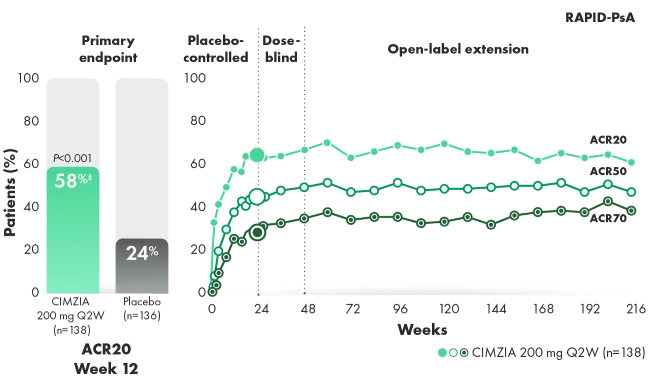
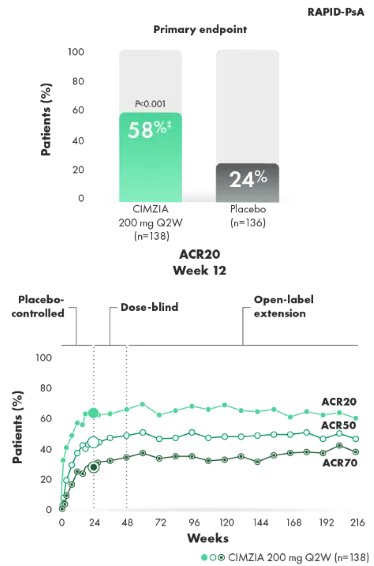
Some patients experienced ACR20 response as early as 1 to 2 weeks after starting CIMZIA1,3
*The same patients may not have responded at each time point.1-3
†RS-NRI: randomized set nonresponder imputation.
‡P<0.001 vs. placebo.1-3
RAPID-PsA2
RAPID-PsA was a randomized, multicenter, Phase 3 trial in patients with active PsA. The trial was double-blind and placebo-controlled through Week 24, followed by an extension study that was dose-blind through Week 48 and open-label through Week 216. In this study, 409 patients who had failed ≥1 DMARD (non-biologic or biologic) were randomized (1:1:1) to CIMZIA 200 mg Q2W (n=138), CIMZIA 400 mg Q4W (n=135), or placebo (n=136). Patients were stratified by prior TNFi exposure; primary nonresponders were excluded.
CIMZIA inhibited progression of structural damage
Mean change in mTSS at Week 241,2§||
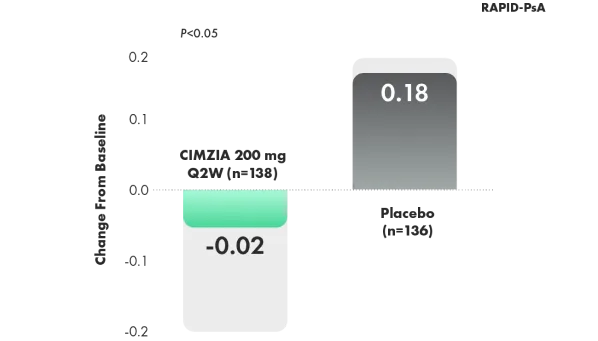

Of those receiving CIMZIA 200 mg Q2W (n=98), 8 of 10 X-rayed patients experienced no radiographic progression over 4 years3¶
X-rayed patients receiving CIMZIA 200 mg Q2W were analyzed using observed case analysis. Radiographic data do not have long-term placebo comparison beyond 24 weeks.
§Randomized set; for placebo patients who escaped early to CIMZIA, the Week 24 values were linearly extrapolated; ANCOVA model.3
||For placebo patients who escaped early to CIMZIA, the Week 24 values were linearly extrapolated. The P value of CIMZIA vs. placebo is based on ANCOVA. For patients with 2 radiographs, but a missing Week 24 or baseline film, linear
extrapolation was performed in all approaches.
¶“No progression” was defined as a change from baseline in mTSS of ≤0.5. When “no progression” was defined as a change from baseline in mTSS of ≤0, 63.3% of X-rayed patients experienced no progression.4
ACR, American College of Rheumatology; ACR20, American College of Rheumatology criteria for 20% response; ACR50, American College of Rheumatology criteria for 50% response; ACR70, American College of Rheumatology criteria for 70% response; ANCOVA, analysis of covariance; DMARD, disease-modifying antirheumatic drug; mTSS, modified Total Sharp Score; OLE, open-label extension; PsA, psoriatic arthritis; Q2W, every 2 weeks; Q4W, every 4 weeks; TNFi, tumor necrosis factor inhibitor.
Long-term skin clearance
CIMZIA delivered skin improvements over 4 years
PASI 75/90/100 response rates in a subpopulation of CIMZIA 200 mg Q2W patients with PsA (n=90)1,2*†
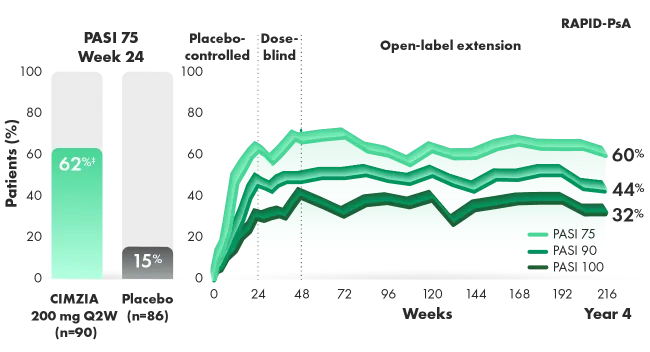
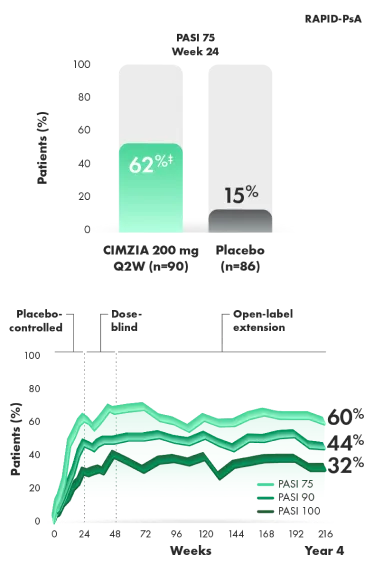
*RS-NRI: randomized set nonresponder imputation.
†PASI 75 response rate at Week 24 in patients with baseline psoriatic skin involvement ≥3% body surface area was a prespecified secondary endpoint for the combined-dose CIMZIA group.
‡Nominal P value.
RAPID-PsA2
RAPID-PsA was a randomized, multicenter, Phase 3 trial in patients with active PsA. The trial was double-blind and placebo-controlled through Week 24, followed by an extension study that was dose-blind through Week 48 and open-label through Week 216. In this study, 409 patients who had failed ≥1 DMARD (non-biologic or biologic) were randomized (1:1:1) to CIMZIA 200 mg Q2W (n=138), CIMZIA 400 mg Q4W (n=135), or placebo (n=136). Patients were stratified by prior TNFi exposure; primary nonresponders were excluded.
DMARD, disease-modifying antirheumatic drug; OLE, open-label extension; PASI, Psoriasis Area and Severity Index; PsA, psoriatic arthritis; Q2W, every 2 weeks; Q4W, every 4 weeks; TNFi, tumor necrosis factor inhibitor.
Resolution of enthesitis, dactylitis, and nail psoriasis
Post hoc analysis, RS, LOCF (n=35 patients with LDI >0 at baseline): Total resolution defined as LDI=0 in patients who at baseline had at least 1 digit affected and with a difference in circumference ≥10% compared with the opposite digit LDI >0.
Resolution of enthesitis through 4 years (post hoc analysis of combined doses from 4-year OLE of RAPID-PsA)3,4
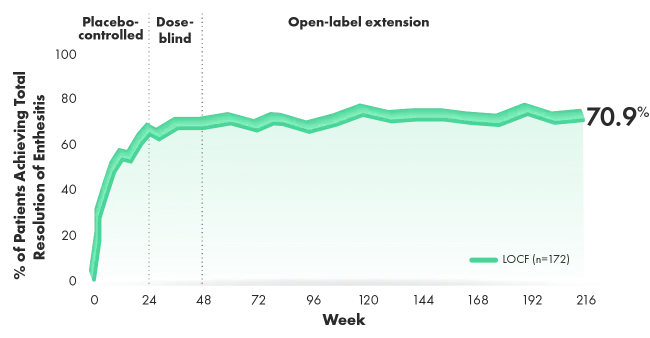
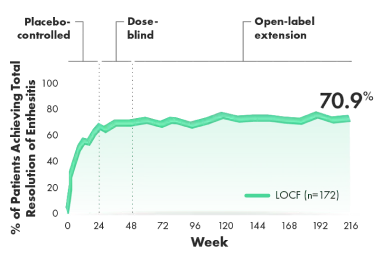
~7 of every 10 patients with baseline involvement achieved total resolution of enthesitis over 4 years3,4
Post hoc analysis: Total resolution rates for nail psoriasis in the most severe nail of the hand are presented for patients affected by this condition at baseline. This condition was defined at baseline as mNAPSI >0 for nail psoriasis.3,4
Total resolution of dactylitis over 4 years (RS, LOCF) (post hoc analysis
from 4‑year OLE of RAPID-PsA)3,4
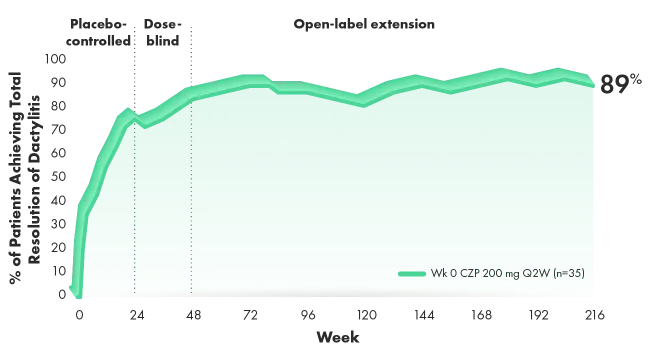
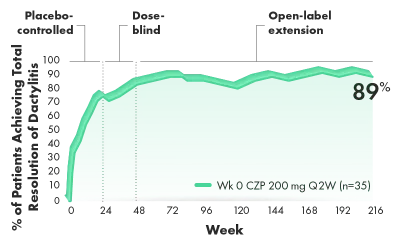
>8 of every 10 patients with baseline involvement achieved total resolution of dactylitis3,4
Post hoc analysis: Total resolution rates for nail psoriasis in the most severe nail of the hand are presented for patients affected by this condition at baseline. This condition was defined at baseline as mNAPSI >0 for nail psoriasis.3,4
Total resolution of nail psoriasis in the most severe nail of the hand over 4 years (LOCF) (post hoc analysis from 4-year OLE of RAPID-PsA)3,4
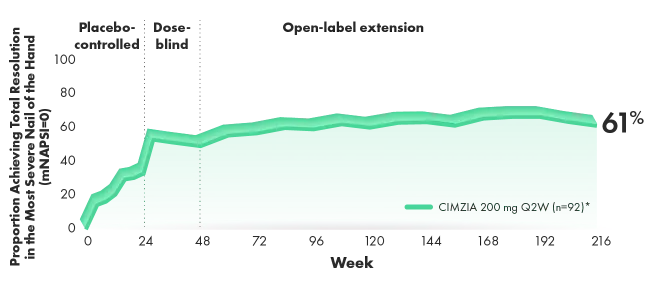
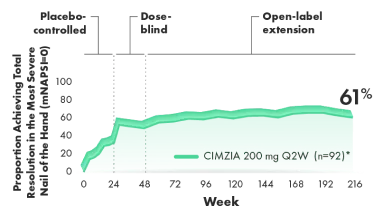
~6 of every 10 patients with baseline involvement achieved total resolution of nail psoriasis over 4 years3,4
*92 patients of the 138 patients in the CIMZIA 200 mg Q2W arm had baseline nail disease and were evaluated through Week 216.
RAPID-PsA2
RAPID-PsA was a randomized, multicenter, Phase 3 trial in patients with active PsA. The trial was double-blind and placebo-controlled through Week 24, followed by an extension study that was dose-blind through Week 48 and open-label through Week 216. In this study, 409 patients who had failed ≥1 DMARD (non-biologic or biologic) were randomized (1:1:1) to CIMZIA 200 mg Q2W (n=138), CIMZIA 400 mg Q4W (n=135), or placebo (n=136). Patients were stratified by prior TNFi exposure; primary nonresponders were excluded.
CZP, certolizumab pegol; DMARD, disease-modifying antirheumatic drug; LDI, Leeds Dactylitis Index; LEI, Leeds Enthesitis Index; LOCF, last observation carried forward; mNAPSI, modified Nail Psoriasis Severity Index; OLE, open-label extension; PsA, psoriatic arthritis; Q2W, every 2 weeks; Q4W, every 4 weeks; RS, randomized set; TNFi, tumor necrosis factor inhibitor.
Efficacy in TNFi-experienced patients
Improvement in signs and symptoms regardless of prior TNFi experience3,4
ACR20/50/70 response rates at Year 43*
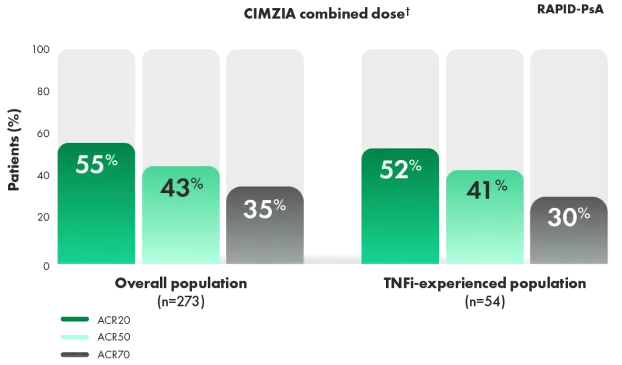
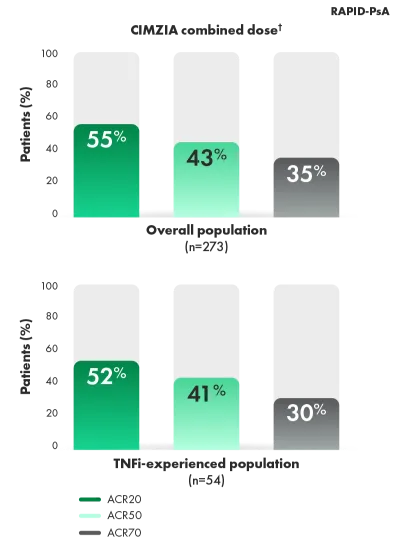
*RS-NRI: randomized set nonresponder imputation.
†CIMZIA combined dose included patients receiving CIMZIA 200 mg Q2W and patients receiving CIMZIA 400 mg Q4W.
RAPID-PsA2
RAPID-PsA was a randomized, multicenter, Phase 3 trial in patients with active PsA. The trial was double-blind and placebo-controlled through Week 24, followed by an extension study that was dose-blind through Week 48 and open-label through Week 216. In this study, 409 patients who had failed ≥1 DMARD (non-biologic or biologic) were randomized (1:1:1) to CIMZIA 200 mg Q2W (n=138), CIMZIA 400 mg Q4W (n=135), or placebo (n=136). Patients were stratified by prior TNFi exposure; primary nonresponders were excluded.
ACR, American College of Rheumatology; DMARD, disease-modifying antirheumatic drug; OLE, open-label extension; PsA, psoriatic arthritis; Q2W, every 2 weeks; Q4W, every 4 weeks; TNFi, tumor necrosis factor inhibitor.
Minimal disease activity
MDA: A holistic treatment goal for patients with PsA
MDA is a single holistic treatment goal that encompasses multiple measures commonly used by rheumatologists to assess PsA patients.
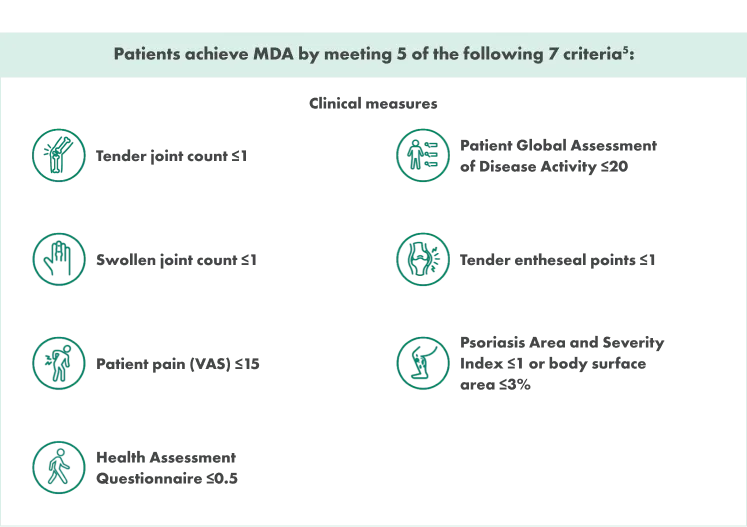
CIMZIA helped ~6 of 10 patients achieve MDA at Year 43
At Year 4:
58% and 39% of patients treated with CIMZIA achieved MDA by OC and NRI, respectively
Limitation of OLE: Responder rates do not have long-term placebo comparator beyond Week 24
MDA over 216 weeks (post hoc analysis of combined doses from 4-year OLE of RAPID-PsA)3
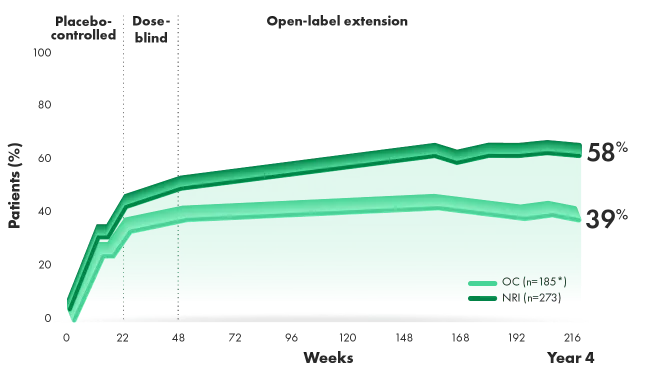
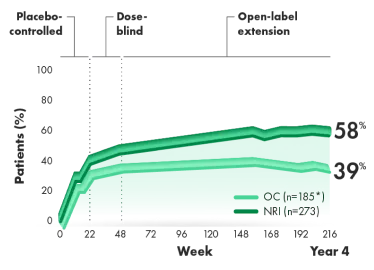
Study population included in bio-naïve and bio-experienced patients
*n at Week 216.
GRAPPA: Updated treatment recommendations for PsA 20216
In the most recent update to GRAPPA treatment recommendations, the goals of therapy for all patients with PsA are:
See guidelines for full recommendations. This information is not intended to be medical advice.
RAPID-PsA2
RAPID-PsA was a randomized, multicenter, Phase 3 trial in patients with active PsA. The trial was double-blind and placebo-controlled through Week 24, followed by an extension study that was dose-blind through Week 48 and open-label through Week 216. In this study, 409 patients who had failed ≥1 DMARD (non-biologic or biologic) were randomized (1:1:1) to CIMZIA 200 mg Q2W (n=138), CIMZIA 400 mg Q4W (n=135), or placebo (n=136). Patients were stratified by prior TNFi exposure; primary nonresponders were excluded.
DMARD, disease-modifying antirheumatic drug; GRAPPA, Group for Research and Assessment of Psoriasis and Psoriatic Arthritis; LDA, low disease activity; MDA, minimal disease activity; NRI, nonresponder imputation; OC, observed case; OLE, open-label extension; PsA, psoriatic arthritis; Q2W, every 2 weeks; Q4W, every 4 weeks; TNFi, tumor necrosis factor inhibitor; VAS, visual analog scale.
Meaningful relief patients can feel
CIMZIA helped patients achieve lasting pain reduction
Change from baseline in patient global assessment of arthritis pain through Year 43,4*†
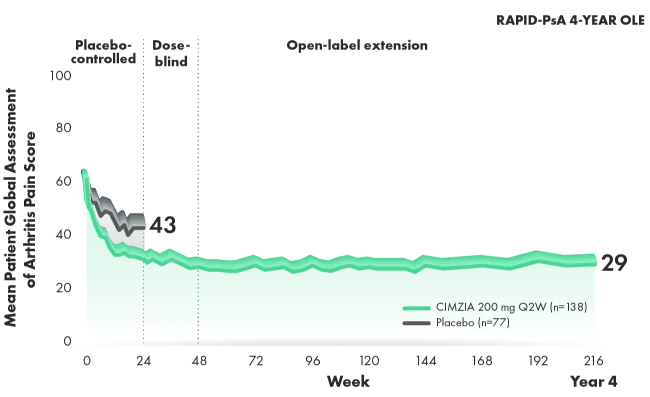
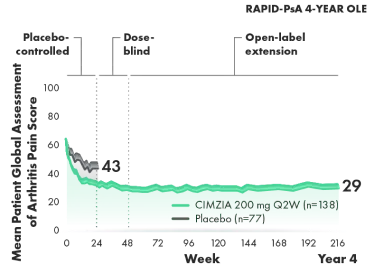
50% reduction in pain score at Year 4 with CIMZIA 200 mg Q2W3,4
*Pain assessment is a part of the ACR score. Pain assessment is done by the patient, hence individual assessment/score may vary from patient to patient. Patient assessment of arthritis pain, VAS: 0=no pain and 100=most severe pain.
†Randomized set. LOCF is used for missing data, early withdrawals, or placebo escape.
RAPID-PsA2
RAPID-PsA was a randomized, multicenter, Phase 3 trial in patients with active PsA. The trial was double-blind and placebo-controlled through Week 24, followed by an extension study that was dose-blind through Week 48 and open-label through Week 216. In this study, 409 patients who had failed ≥1 DMARD (non-biologic or biologic) were randomized (1:1:1) to CIMZIA 200 mg Q2W (n=138), CIMZIA 400 mg Q4W (n=135), or placebo (n=136). Patients were stratified by prior TNFi exposure; primary nonresponders were excluded.
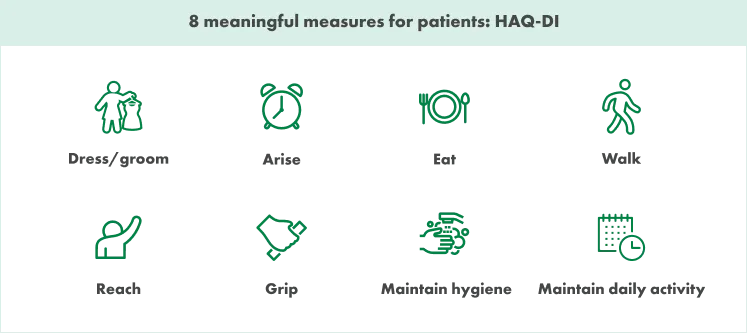
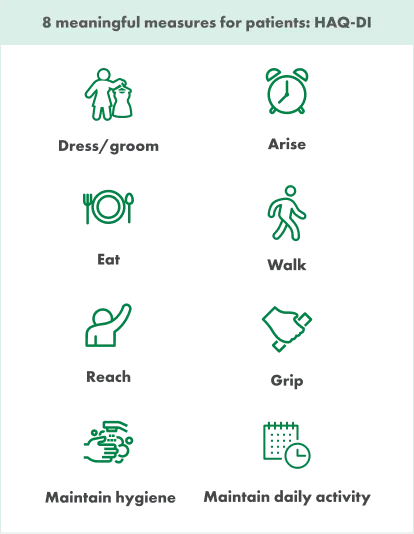
Help improve 8 key functions in patients’ daily lives
Mean improvement from baseline in physical function—PsA HAQ-DI improvement through Week 241,2,4‡
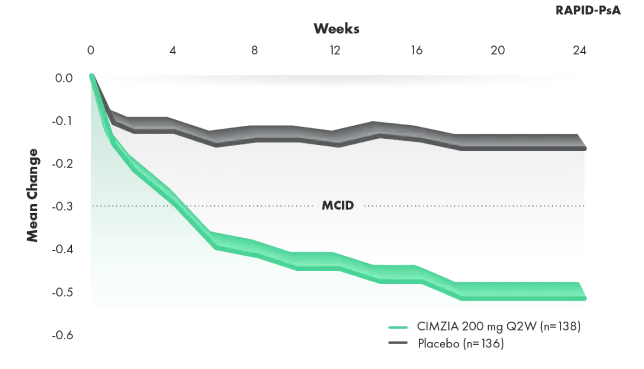
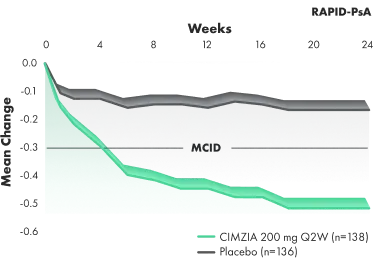
‡ITT-LOCF: intent-to-treat last observation carried forward.
ACR, American College of Rheumatology; ACR20, American College of Rheumatology criteria for 20% response; ACR50, American College of Rheumatology criteria for 50% response; ACR70, American College of Rheumatology criteria for 70% response; DMARD, disease-modifying antirheumatic drug; HAQ-DI, Health Assessment Questionnaire Disability Index; LOCF, last observation carried forward; MCID, minimal clinically important difference; OLE, open-label extension; PsA, psoriatic arthritis; Q2W, every 2 weeks; Q4W, every 4 weeks; TNFi, tumor necrosis factor inhibitor; VAS, visual analog scale.

CIMplicity can help provide ongoing support for your patients throughout their journey.
Interested in CIMZIA
In-Office Injection?
Serious and sometimes fatal side effects have been reported with CIMZIA, including tuberculosis (TB), bacterial sepsis, invasive fungal infections (such as histoplasmosis), and infections due to other opportunistic pathogens (such as Legionella or Listeria). Patients should be closely monitored for the signs and symptoms of infection during and after treatment with CIMZIA. Lymphoma and other malignancies, some fatal, have been reported in children and adolescent patients treated with TNF blockers, of which CIMZIA is a member.
CIMZIA is a tumor necrosis factor (TNF) blocker indicated for:
CONTRAINDICATIONS
CIMZIA is contraindicated in patients with a history of hypersensitivity reaction to certolizumab pegol or to any of the excipients. Reactions have included angioedema, anaphylaxis, serum sickness, and urticaria.
SERIOUS INFECTIONS
Patients treated with CIMZIA are at increased risk for developing serious infections that may lead to hospitalization or death. Most patients who developed these infections were taking concomitant immunosuppressants such as methotrexate or corticosteroids.
Discontinue CIMZIA if a patient develops a serious infection or sepsis.
Reported infections include:
Carefully consider the risks and benefits of treatment with CIMZIA prior to initiating therapy in the following patients: with chronic or recurrent infection; who have been exposed to TB; with a history of opportunistic infection; who resided in or traveled in regions where mycoses are endemic; with underlying conditions that may predispose them to infection. Monitor patients closely for the development of signs and symptoms of infection during and after treatment with CIMZIA, including the possible development of TB in patients who tested negative for latent TB infection prior to initiating therapy.
MALIGNANCY
Lymphoma and other malignancies, some fatal, have been reported in children and adolescent patients treated with TNF blockers, of which CIMZIA is a member.
HEART FAILURE
HYPERSENSITIVITY
HEPATITIS B VIRUS REACTIVATION
NEUROLOGIC REACTIONS
HEMATOLOGIC REACTIONS
DRUG INTERACTIONS
AUTOIMMUNITY
IMMUNIZATIONS
ADVERSE REACTIONS
Please refer to full Prescribing Information.
US-CZ-2600076
References: 1. CIMZIA [prescribing information]. Smyrna, GA: UCB, Inc. 2. Mease PJ, Fleischmann R, Deodhar AA, et al. Effect of certolizumab pegol on signs and symptoms in patients with psoriatic arthritis: 24-week results of a phase 3 double-blind randomised placebo-controlled study (RAPID-PsA). Ann Rheum Dis. 2014;73(1):48-55. 3. van der Heijde D, Deodhar A, FitzGerald O, et al. 4-year results from the RAPID-PsA phase 3 randomised placebo-controlled trial of certolizumab pegol in psoriatic arthritis. RMD Open. 2018;4(1):e000582. 4. Data on file. UCB, Inc., Smyrna, GA. 5. Gossec L, McGonagle D, Korotaeva T, et al. Minimal disease activity as a treatment target in psoriatic arthritis: a review of the literature. J Rheumatol. 2018;45(1):6-13. 6. Coates LC, Soriano ER, Corp N, et al. Group for Research and Assessment of Psoriasis and Psoriatic Arthritis (GRAPPA): updated treatment recommendations for psoriatic arthritis 2021. Nat Rev Rheumatol. 2022;18(8):465-479.